
It is a Sunday afternoon, and someone asks a simple question: What do you want to do today? You open your mouth and nothing comes out. You know what you should do, what is expected, and what would look responsible. But what you want, underneath all of that, is a blank. You realize, with a small jolt, that you can’t remember the last time anyone asked, or the last time you asked yourself. Whose life have I been running?
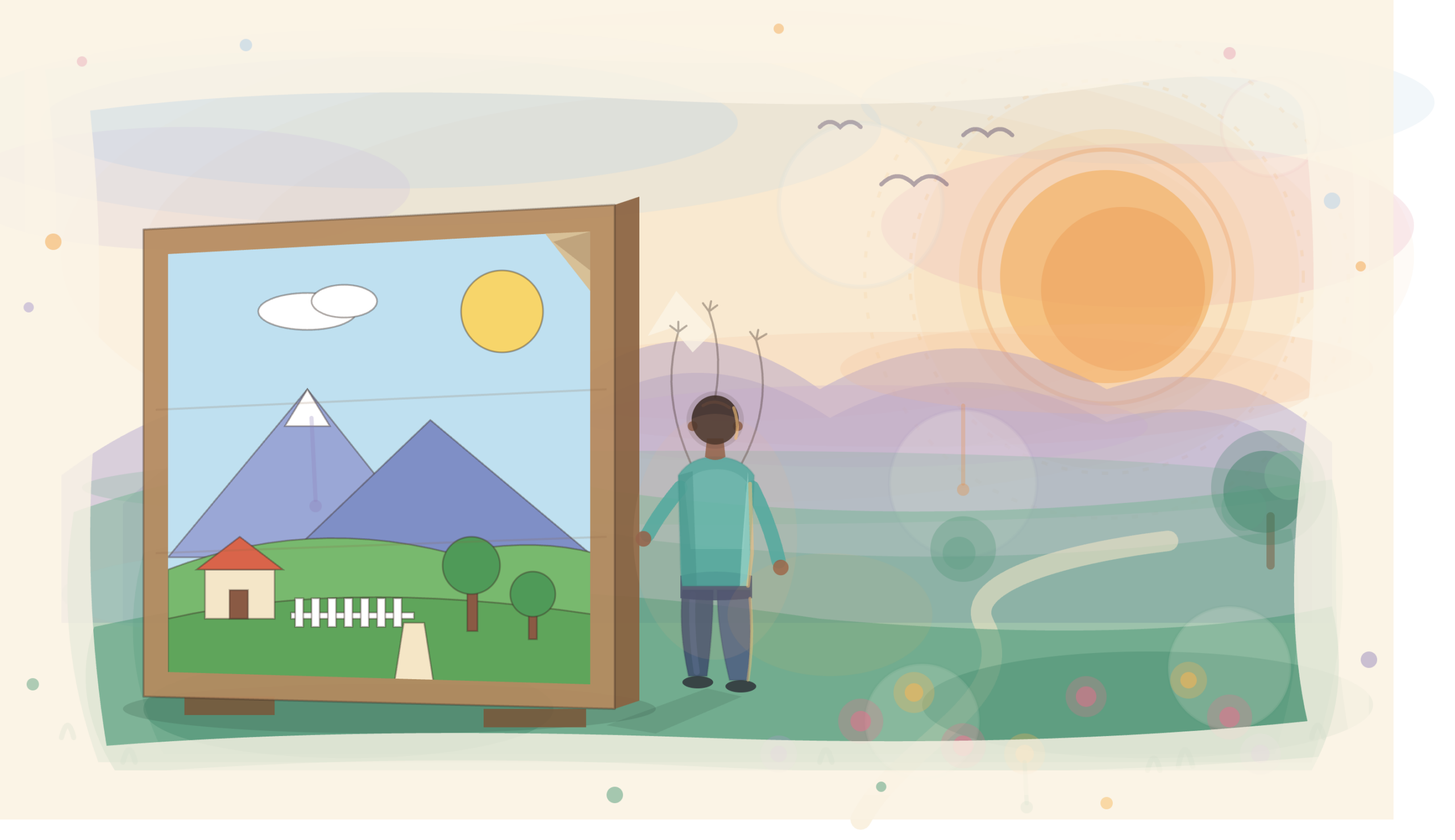
That question is where this piece begins. Most of us live inside a picture of how life works, how to behave, and what success and worth look like. We didn’t draw it. We absorbed it, one year at a time, starting before we could question any of it.
How the picture gets built
A child arrives with almost no instructions and a powerful instinct to learn. The fastest way to learn is to watch the adults, so we do. We study how they handle money, anger, rest, conflict, work, and affection. We learn what earns a smile and what earns a frown. We don’t hear most of this as advice. We absorb it as the way things are.
The adults around us were mostly doing their best, and they were working from pictures they inherited too. That is why this isn’t about blame. It’s about noticing that the picture is a copy of a copy, handed down with the best intentions and very few questions asked.
We copy, but we don’t always copy what works
Because we learn by example, we pick up whatever was in front of us: the good habits and the poor ones, the wise instincts and the unexamined fears. Later, even when we recognize something healthy, such as regular rest, honest conversation, or steady exercise, we often struggle to keep it going long enough to feel its effect.
There are reasons for that. We were never shown how to sustain things, only how to start them. We expect fast results and quit when they don’t come. We borrow other people’s routines without asking whether they fit our lives. And when a new habit clashes with the old picture, the old picture usually wins. A good practice needs months to show its impact, and most of us leave in the first few weeks.
The training to please
Almost from the start, approval is attached to behavior. Be quiet and you’re praised. Be agreeable and you’re easy to love. Do as you’re told, when you’re told, and things go smoothly. These lessons are often practical, and some are necessary. But over years they teach a quiet rule: my job is to work out what others want and provide it.
By adulthood, the instruction comes from everywhere: bosses, schedules, social media, family expectations, and the vague sense of what “people like us” do. We wait to be told what to do and when. We apologize for taking space. We agree before we’ve thought. And the longer we live this way, the less we notice that we’re doing it.
The instincts that were shut down
Every child has instincts: what feels right, what feels wrong, what is interesting, what is frightening, what is true. Many of them get corrected early. Don’t be so sensitive. Stop making a fuss. That’s silly. You don’t really feel that. Sometimes the message is more direct: shame for crying, for asking too many questions, for wanting something different from what was planned.
A child can’t weigh that against reality. All they learn is that their inner signals are unreliable or unwelcome. So they turn the volume down. Years later, as adults, we feel a vague unease about a job, a relationship, or a decision, and we override it automatically, because overriding is what we learned. The instinct didn’t disappear. It just stopped being trusted.
A few questions can reveal how much of the picture is borrowed:
- Which of my beliefs about success did I choose, and which did I inherit?
- When I say “I should,” whose voice is that?
- What did I want as a child that I decided was silly or impossible?
- When I feel a gut reaction, do I listen to it or argue it down?
How we get lost, and how we spiral
When the picture is borrowed, the instincts are muted, and approval is the compass, life works well while the road is clear. We follow the script and collect the markers. But when the script runs out, or circumstances shift, or the thing we’ve been working toward arrives and doesn’t satisfy, there is nothing underneath to steer by.
That is when drift begins. We reach for quick relief: more work, more scrolling, more spending, more distraction. We say yes to things we don’t want. We stop checking in with ourselves, because the answers might be inconvenient. Small compromises pile up, and one day we look around and realize how far we are from anywhere we meant to go. It is easy to spiral from there, because with no inner anchor, every wave moves us.
Seeing through the illusion
The word “illusion” doesn’t mean everything is false. It means we mistake a picture for the thing itself. The picture of “how life must be done” feels as solid as a wall, and most of it is a habit. Seeing through it isn’t a dramatic awakening. It begins with noticing, again and again, this is a belief, not a fact.
You can’t rebuild everything at once, and you don’t need to. You start by testing one assumption at a time, in small and safe ways:
- Say no to something minor, and notice what happens.
- Make one small decision purely from preference.
- Ask yourself, before agreeing, “Do I actually want this?”
- Keep one good habit for ninety days, however small, so you finally see what it does.
The witness: seeing the picture as a picture
This is where Turiya becomes practical. In the Vedantic tradition, Turiya is the “fourth” state, the awareness that quietly watches waking, dreaming, and deep sleep without being any of them. The same tradition speaks of maya, the veil of appearances we take for reality. You don’t need to reach Turiya fully to borrow its gift. The witness is the part of you that can watch your beliefs, your need for approval, and your reflexive “shoulds” without being swept along by them.
From that seat, the borrowed picture becomes visible. You can notice, I’m saying yes because I’m afraid of disappointing someone, or That’s my father’s voice, not mine, or I feel something is off, and I’m about to talk myself out of it. The noticing doesn’t force you to change anything. But it gives you a choice that you didn’t have while you were inside the picture. A breath before answering, a few quiet minutes with no screen, and the habit of saying I notice I’m feeling this instead of I am this are enough to begin.
Reclaiming your own instincts
Once you can see the picture, you can start rebuilding trust in your own signals, slowly. Think of it as taking back what was shut down.
- Listen first. Before you consult anyone else, ask what you feel and let the answer be imperfect.
- Treat small signals as data. Unease, boredom, and excitement are information, not weaknesses.
- Offer yourself what you wish an adult had offered you: patience, curiosity, and permission to be a beginner.
- Stay with what works. Choose one healthy practice, keep it long enough to feel its effect, and let the evidence, not the old picture, convince you.
A word of balance
Seeing through the illusion is not a reason to blame your parents or the people who raised you. Most of them gave what they had, and many are working from pictures they never chose either. Compassion for them and clarity about the pattern can live together.
It also doesn’t mean throwing out everything you were taught. Some of it is wisdom, and the goal is to choose it consciously, not reject it by reflex. Be careful, too, not to swing into the opposite trap of needing to oppose everything or please no one. That is only another script.
And if the spiral has become heavy, such as persistent sadness, anxiety, numbness, or a sense that you can’t climb out, talk to a trusted person or a qualified professional. Self-reflection is a good companion, but it isn’t a substitute for care.
An invitation
Tonight, before you decide what you should do tomorrow, take a sheet of paper and answer five questions:
- What is one belief about how life “has to” be that I never actually chose?
- Where in my week am I mostly trying to please someone?
- What instinct of mine have I been overriding, and what is it trying to tell me?
- What is one small decision I can make tomorrow purely because I want to?
- What one healthy practice will I keep for ninety days, however small, so I can see what it does?
Then take that step. Make the choice. Say the small no. Listen for what you want, even if the first answer is faint.
You didn’t choose the picture you were handed, and you can’t be blamed for building a life inside it. But you can learn to see it, and once you see it, you can begin to draw your own. The illusion lasts only as long as it goes unnoticed, and noticing, patiently and kindly, is where it starts to loosen.